When a company invests in marketing and doesn’t see results, the instinctive answer is always the same: more leads, more traffic, more ads, more reach.
But the buyer changed, and so did the problem that needs solving.
Buyers decide before they become leads
Today, before speaking with any company, a buyer has already researched, compared, read reviews and consulted AI. HubSpot data shows that nearly 70% of marketers say leads arrive later in the buying process because buyers did AI-assisted research first. Another 37% say leads arrive better informed.
6sense confirms it: 94% of B2B buying groups rank vendors before contacting sales. In nearly 77% of cases, they buy from whoever is first on that list.
People don’t arrive neutral. They arrive with opinions already formed, a mental shortlist and a preferred vendor. Those impressions form before the first conversation: your content, your search results, the clarity of your message, the consistency of your digital presence.
Marketing doesn’t start when the lead arrives. It starts before, when the person is still deciding whether to put you on the list.
Is your brand clear enough to make the list?
Do people understand what you do? Who it’s for? Why you and not the ten other similar options? Do they understand what problem you solve and why they should trust you?
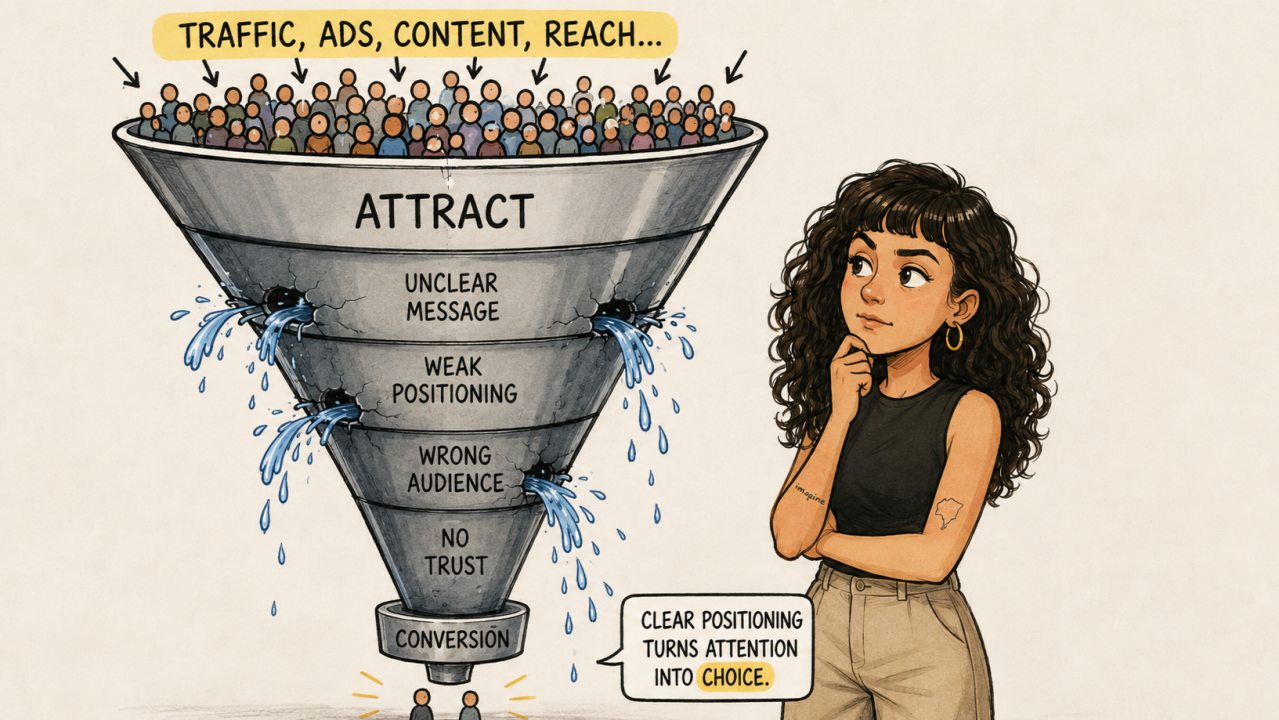
If the answer is no, more traffic won’t fix it. It just puts more people in front of a question your brand still hasn’t answered.
When clarity did what traffic couldn’t
A client of mine in Europe had an influencer running their Instagram. High reach, real views, traffic arriving on the site. Almost no conversions. We ran a diagnostic and found the problem: the influencer’s message and the website were saying completely different things. People arrived curious, spent seconds on the page and left. The audience was exactly who the influencer attracted. Just not who the website was built for.
We spent twelve months building positioning: clarifying who the brand was for and what it offered, and making the message coherent from the first touchpoint to the site. Conversion grew 400% in one year.
Clarity did what more traffic couldn’t.
What generic positioning costs
The numbers show what this costs. In 2025, the average cost per lead on Google Ads reached $70. On Facebook, cost per lead rose nearly 21%. Testing got expensive. Cold leads got even more expensive. When attention is scarcer and buyers are more demanding, generic positioning stops working.
Clear positioning makes the investment work. Positioning became conversion infrastructure: the mechanism that turns attention into interest, curiosity into purchase intent and a visitor into a decision. It helps someone understand whether they’re in the right place, separates a browser from a buyer, and puts the brand on the shortlist before any sales conversation starts.
A company can have traffic, followers and active ads and still not sell, not be remembered, not be chosen. Volume doesn’t solve a clarity problem.
Before asking for more leads
Before asking how to generate more leads, ask why someone would choose you over all the similar options. The answer requires looking inward before investing outward: reviewing the message, understanding the audience and being honest about what differentiates the brand, before expecting the market to notice a difference you never communicated.
Is your brand easy to choose?
Originally published on LinkedIn. Follow me on LinkedIn ↗